As of November 16, 2026
“There is a filter” is not a complete answer to a property’s water question. A pitcher, an under-sink unit, and a treatment system at the water supply’s entry point serve different purposes. For West Plains residents following the PFAS response, it is important to distinguish help available now from longer-term work still being planned.
Ecology’s November update reports that Spokane County had installed seven wellhead treatment systems as of November 6, with 14 more in progress. The agency also reported that the City of Spokane had distributed pitcher or countertop filters to 204 homes. These counts describe different assistance efforts and should not be added together as though every item represented the same kind of treatment. Ecology’s November update

Short-term help and a long-term plan are different things
The airport, city, and county’s March 20 joint release described a bridge from immediate drinking-water access to longer-term solutions. Its proposed measures included access to the Garden Springs fill station, food-grade containers, and point-of-use filters. Whole-house systems and possible municipal-water connections were part of the longer-term approach. That release documents the plan at that time; the November bulletin is the newer source for installation progress. March 20 joint release
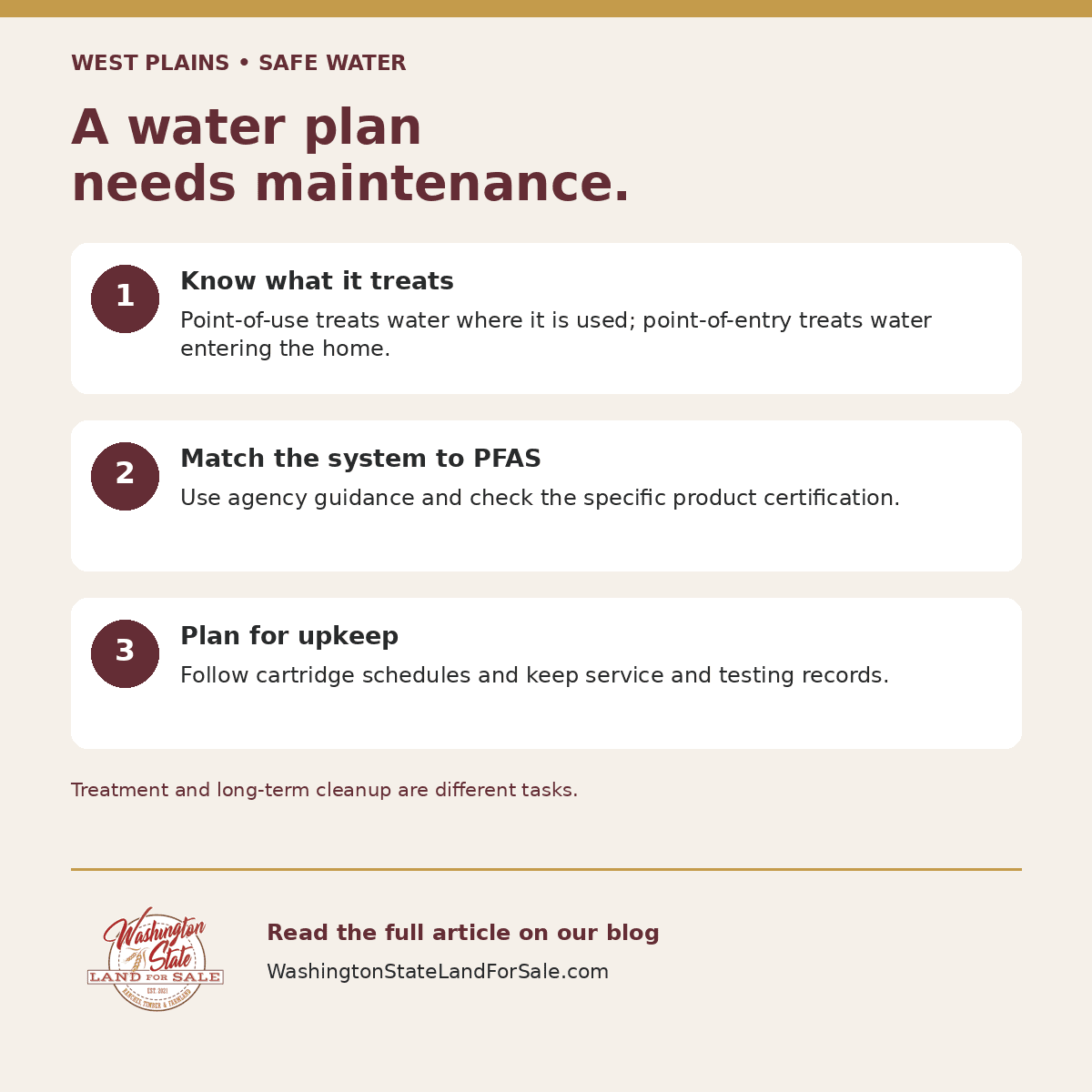
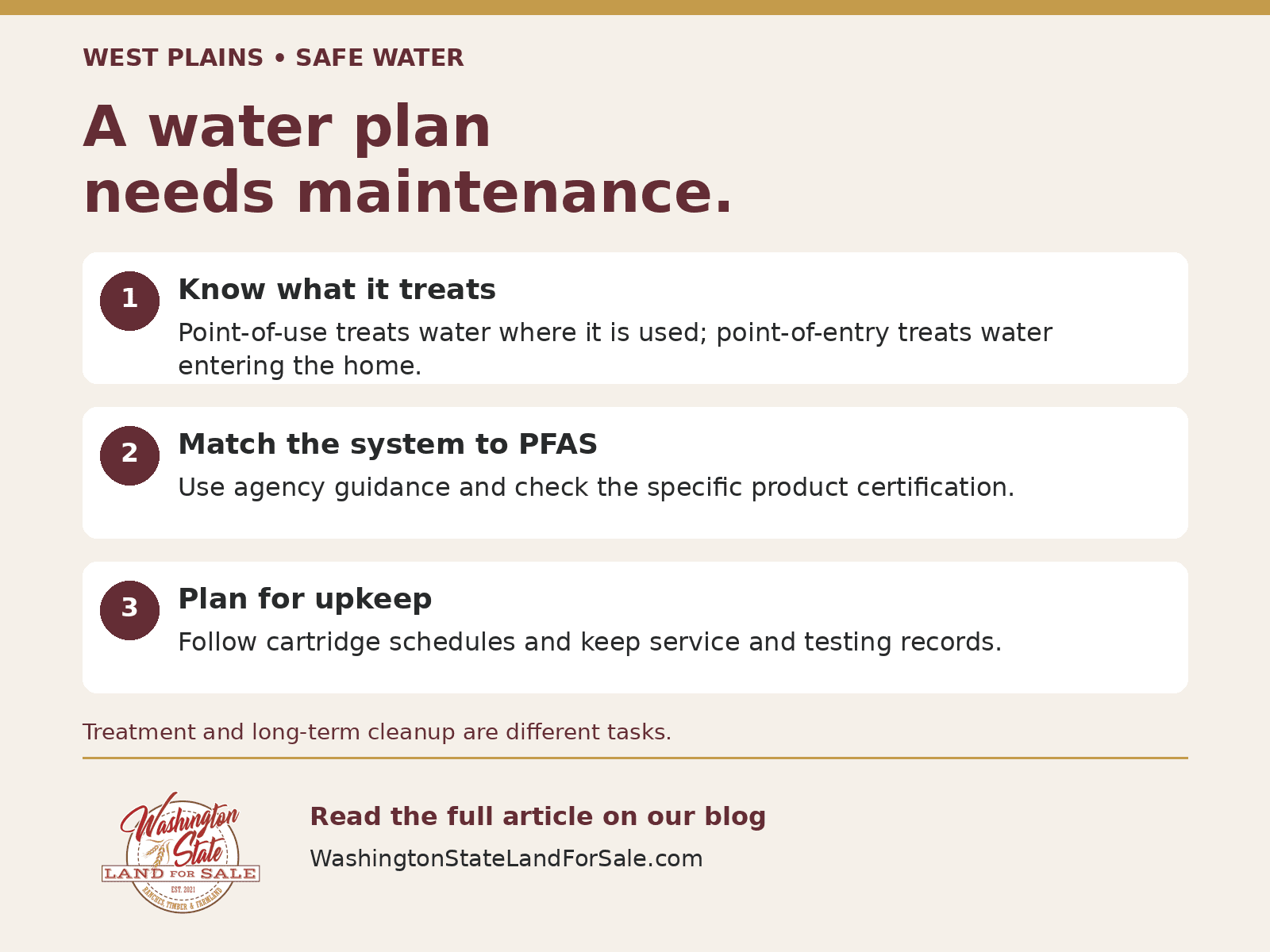
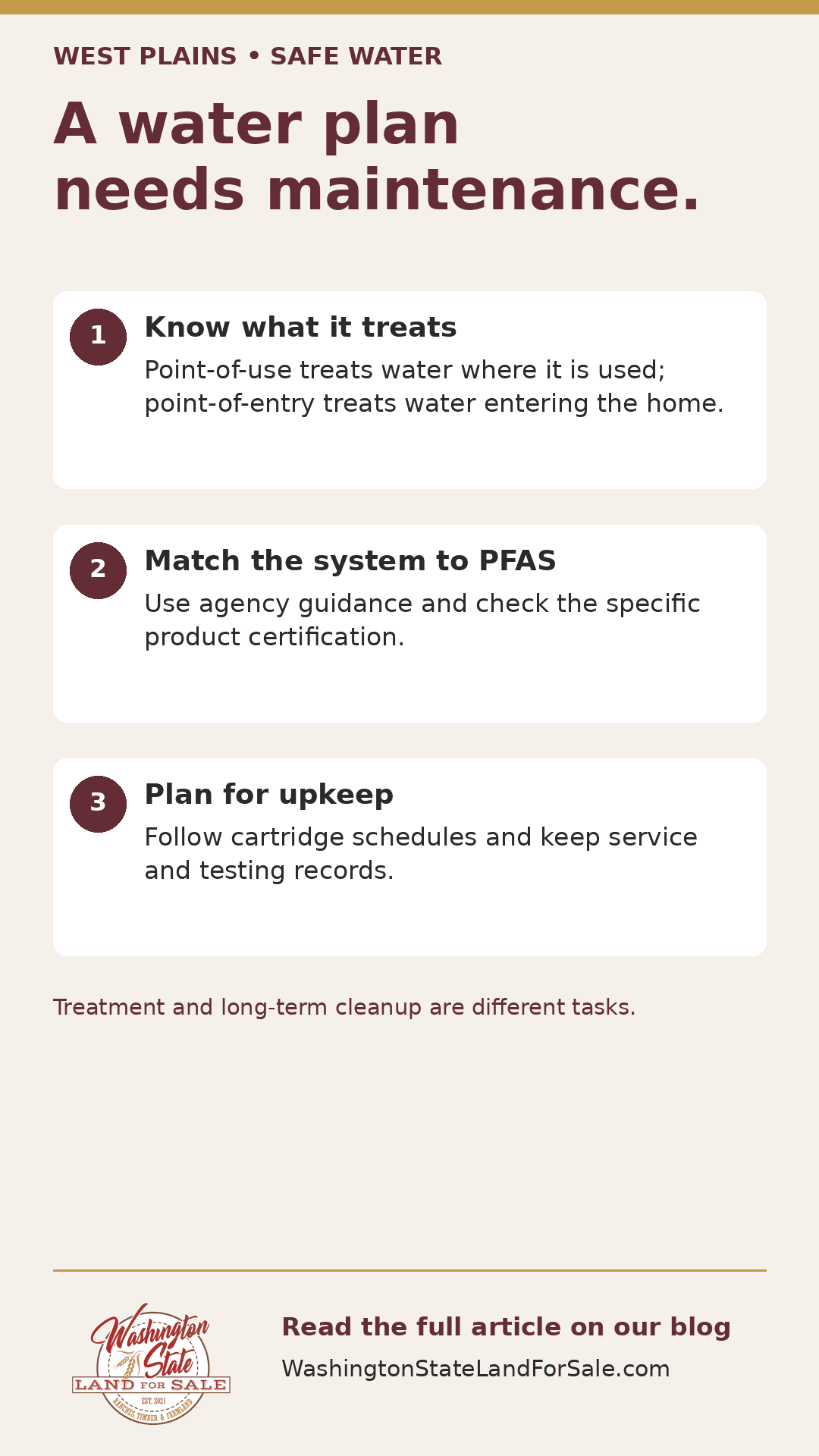
A point-of-use device treats water at a particular use point. A point-of-entry system treats water entering the building or served system. For a specific property, ask the installer which taps, outdoor hydrants, and outbuildings are actually served. Do not assume a kitchen filter treats livestock or irrigation water.
Maintenance belongs in the conversation
The city provides replacement cartridges for its pitcher and countertop filters, including cartridges for the under-sink filters supplied by the Department of Health. It identifies Spokane City Hall, 808 W. Spokane Falls Boulevard, and the Waste to Energy Administration Building, 2900 S. Geiger Boulevard, as pickup locations. Confirm current availability before traveling. Ecology’s November update
Filter maintenance is model-specific. Keep the manufacturer’s instructions, installation date, cartridge-change log, and any treated-water test results. Do not turn one program’s replacement interval into a universal rule for every filter. Washington’s Department of Health provides guidance on choosing treatment and reducing PFAS exposure. DOH household drinking-water guidance
What is still pending?
The November bulletin says Ecology requested another revision of the long-term safe-water plan, with the updated draft due January 8. Ecology said it would hold a 60-day public comment period and public meeting for that plan. The bulletin does not announce that the comment period is already open.
It also identifies $7.495 million from Commerce for wellhead systems, $170,000 from Ecology for related administrative costs, and a potential $23.68 million cleanup grant. The potential grant should not be described as money already awarded or available for every household. Likewise, the reported average system cost of about $115,000 blends completed-installation costs with estimates for remaining sites. It is not a retail quotation for an individual homeowner. Ecology’s November update
For buyers and sellers, the practical next step is to document what exists today: the equipment, the water outlets it serves, who owns it, who maintains it, and what assistance has actually been confirmed. Proposed improvements and expected funding should remain clearly labeled as pending.
Shareable infographic
Square infographic · Landscape infographic · Vertical infographic

Important information and professional advice disclaimer: This article is provided by Washington State Land for Sale, LLC, a real estate brokerage, for general educational and informational purposes. It may discuss legal, tax, accounting, financing, investment, land-use, or government-program matters, but it is not individualized advice in any of those fields and should not be relied on as such. Laws, program requirements, financial conditions, deadlines, and interpretations can change and may differ by jurisdiction, property, and individual circumstances. While we strive to use accurate and useful information, we do not warrant that every statement is complete, current, or applicable to your situation. Before taking action, verify current information with the appropriate agency and consult qualified legal, tax, accounting, lending, or other professional advisers as needed. Nothing in this article guarantees a particular tax result, financing approval, entitlement, property use, transaction outcome, or investment return.