As of November 16, 2026
For many rural buyers, land means more than a house site. It means space for a vegetable garden, hens, a few animals, or a more self-sufficient household. That makes the West Plains PFAS investigation relevant to conversations about how a property will be used, not just where its drinking water comes from.
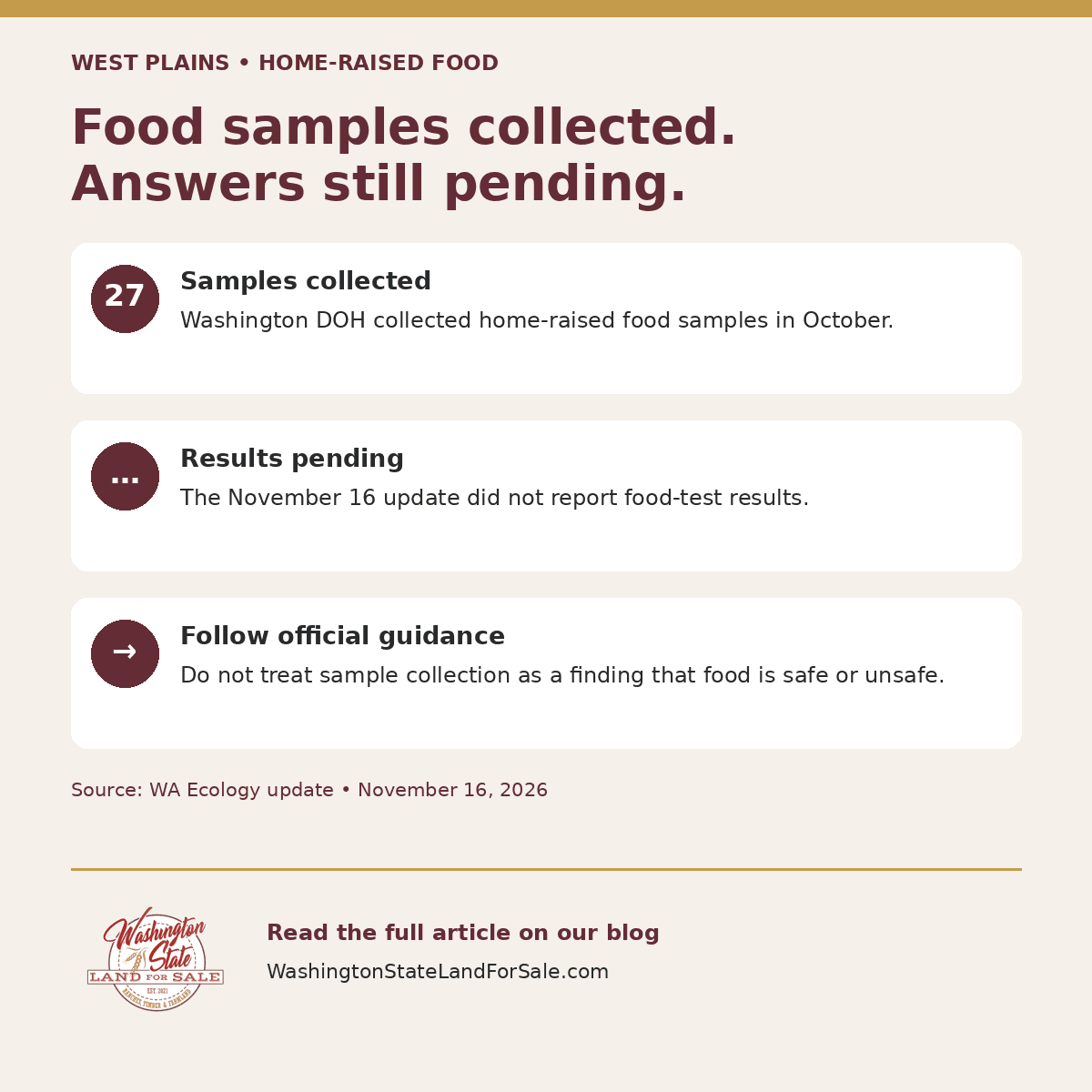
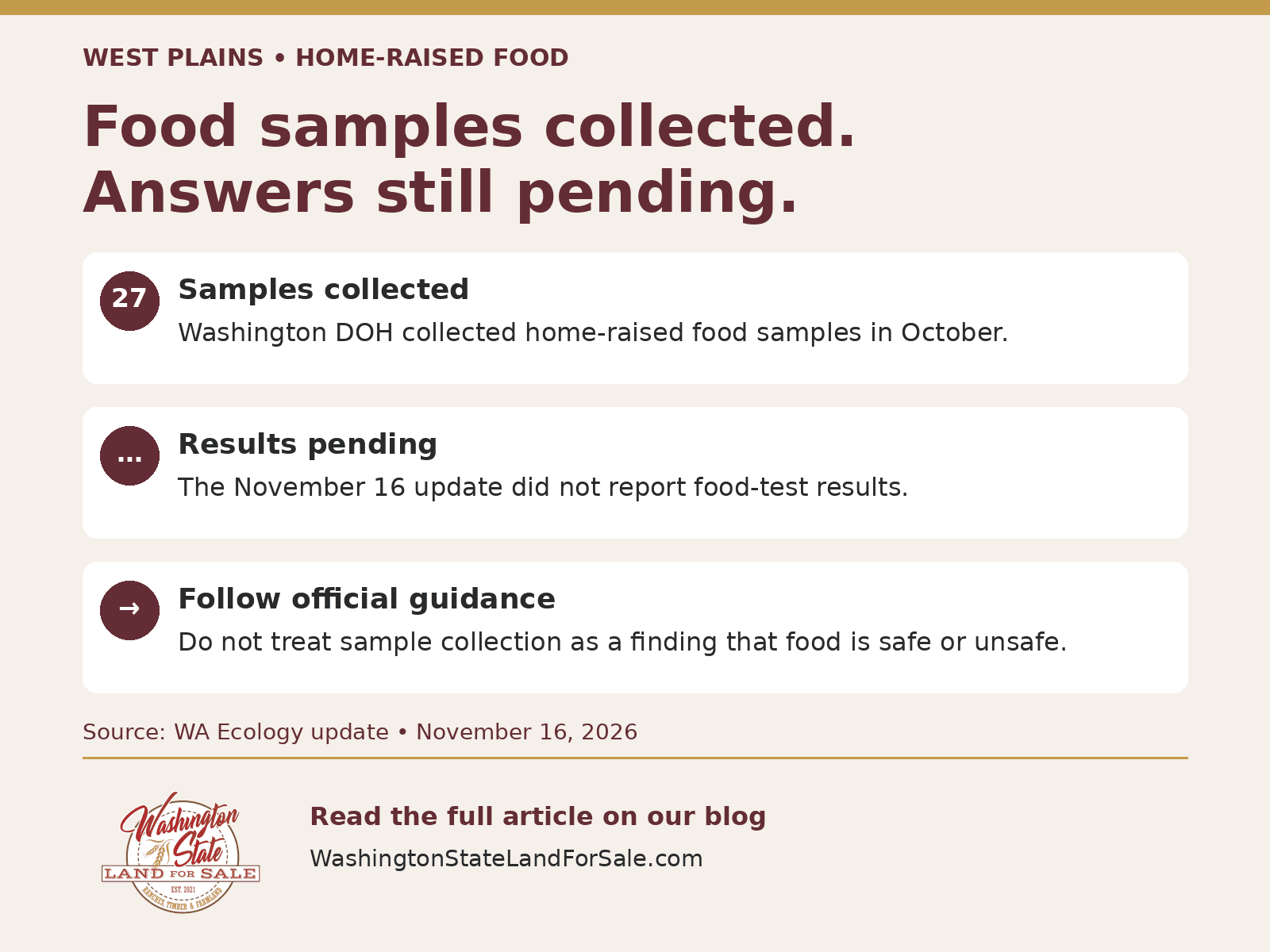
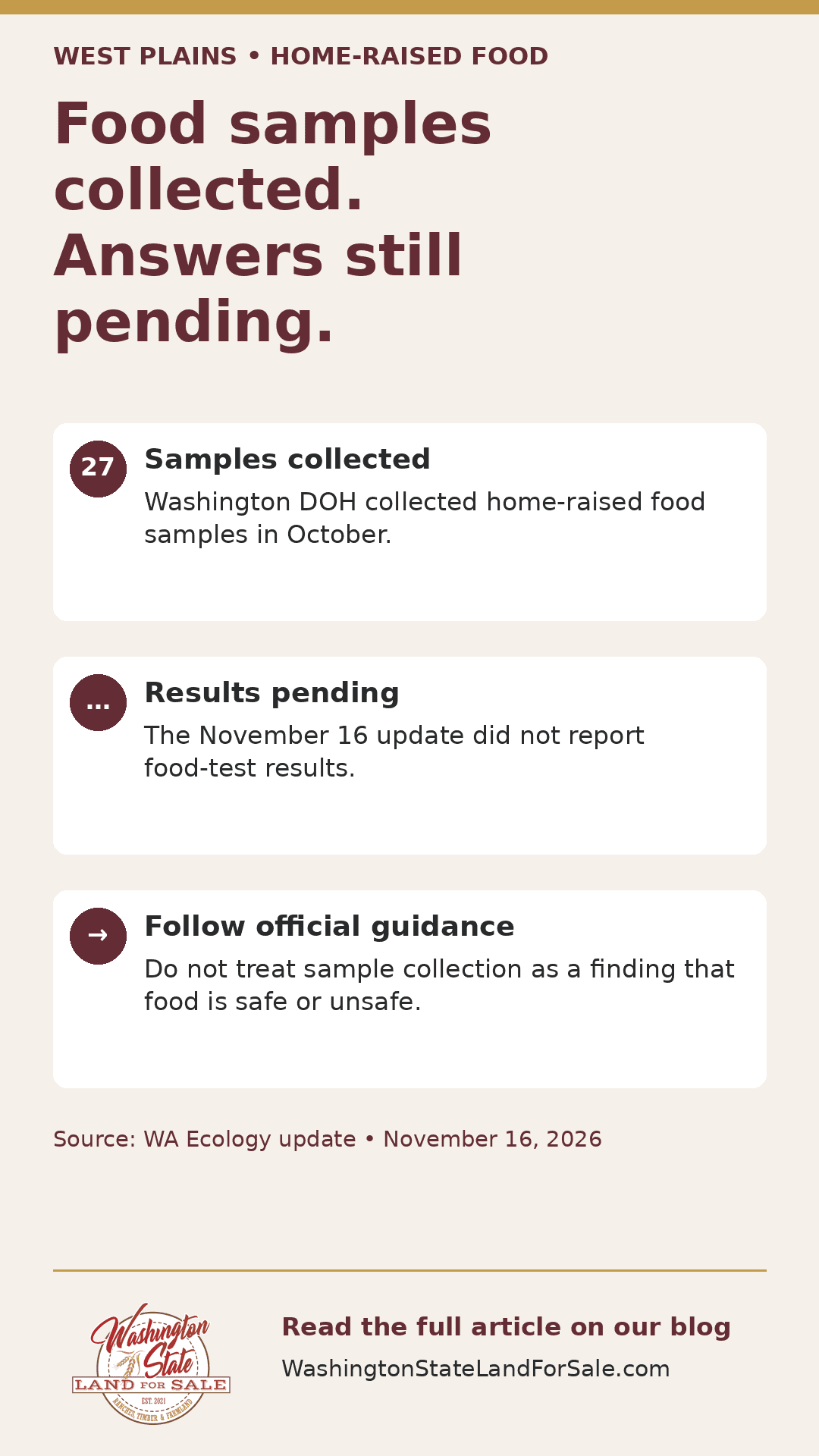
Ecology’s November 16 bulletin says Washington’s Department of Health collected 27 additional samples of home-raised eggs, chicken meat, and garden produce during October. The purpose includes learning whether earlier advice helped participating households lower PFAS in their foods. The bulletin does not report the results of those samples. Collection is not a finding that food is safe or unsafe. Ecology’s November update

What the agencies are trying to learn
The update describes work with a laboratory using a newer method optimized for food testing. If that method works well for fruits and vegetables, more garden testing may become possible, subject to funding. The agency’s stated goal is to better understand how PFAS in soil and water affects home-raised produce and what households can do to reduce exposure.
This is ongoing research, not a completed safety certification for West Plains gardens. It also does not establish that every property in the region has the same conditions. Ecology’s November update
Drinking water is only one part of an animal’s exposure
DOH explains that livestock can take in PFAS through contaminated water, feed, or soil. Its earlier testing in affected communities found PFOS most frequently among detected PFAS in animal products, with chicken eggs particularly likely to contain detectable PFOS. These findings support asking about the whole animal environment rather than assuming one water-system change answers every food question. They are not a test result for your flock. DOH food, livestock, and garden guidance
For household-specific advice about home-raised eggs, meat, milk, or vegetables, Ecology directs residents to DOH toxicologist Barb Morrissey at barbara.morrissey@doh.wa.gov or 564-999-3485. Commercial growers should consult the Washington State Department of Agriculture for guidance relevant to crops they sell. Ecology’s November update; DOH food guidance
Questions worth asking about a rural property
Before planning a garden or animal operation, assemble the records available for that particular property. Ask where household, livestock, and irrigation water originate. Identify which outlets are treated and which bypass treatment. Request existing water reports and any agency advice or testing records related to home-raised food. Where information is missing, write down the question rather than turning an assumption into a claim.
For a transaction, keep water-quality findings and treatment documentation together. Ecology’s real-estate guide addresses PFAS information and treatment-system disclosures, and advises buyers to discuss testing with the seller and broker. Individual legal questions belong with a qualified attorney. Ecology’s real-estate guide
The most useful response to uncertain information is neither alarm nor dismissal. It is a property-specific record, an appropriate test, and advice from the agency or professional equipped to interpret it. The latest food-sampling effort is a step toward better answers. It is not yet those answers.
Shareable infographic
Square infographic · Landscape infographic · Vertical infographic

Important information and professional advice disclaimer: This article is provided by Washington State Land for Sale, LLC, a real estate brokerage, for general educational and informational purposes. It may discuss legal, tax, accounting, financing, investment, land-use, or government-program matters, but it is not individualized advice in any of those fields and should not be relied on as such. Laws, program requirements, financial conditions, deadlines, and interpretations can change and may differ by jurisdiction, property, and individual circumstances. While we strive to use accurate and useful information, we do not warrant that every statement is complete, current, or applicable to your situation. Before taking action, verify current information with the appropriate agency and consult qualified legal, tax, accounting, lending, or other professional advisers as needed. Nothing in this article guarantees a particular tax result, financing approval, entitlement, property use, transaction outcome, or investment return.